The human question
Yoga can include postures, breathing, attention and meditation, but classes carrying the same label can demand very different things. A safe beginning is less about achieving a shape and more about choosing a pace, teacher and modification that fit the person practicing. A useful health story separates the outcome people care about from the proxy that is easiest to count. Rules and scores can support observation, but they should not become moral judgments.
What the evidence says
Research suggests yoga may help some pain, balance, stress and wellbeing outcomes, although studies vary in style, dose, comparison groups and participant characteristics. That variation means a positive average result does not make every pose safe or every program equivalent. We look for convergence across authoritative guidance, trials and systematic reviews rather than presenting one new paper as a final answer. Population, comparison group, duration, absolute effect and harms all shape what a finding can honestly mean.
A gentle experiment
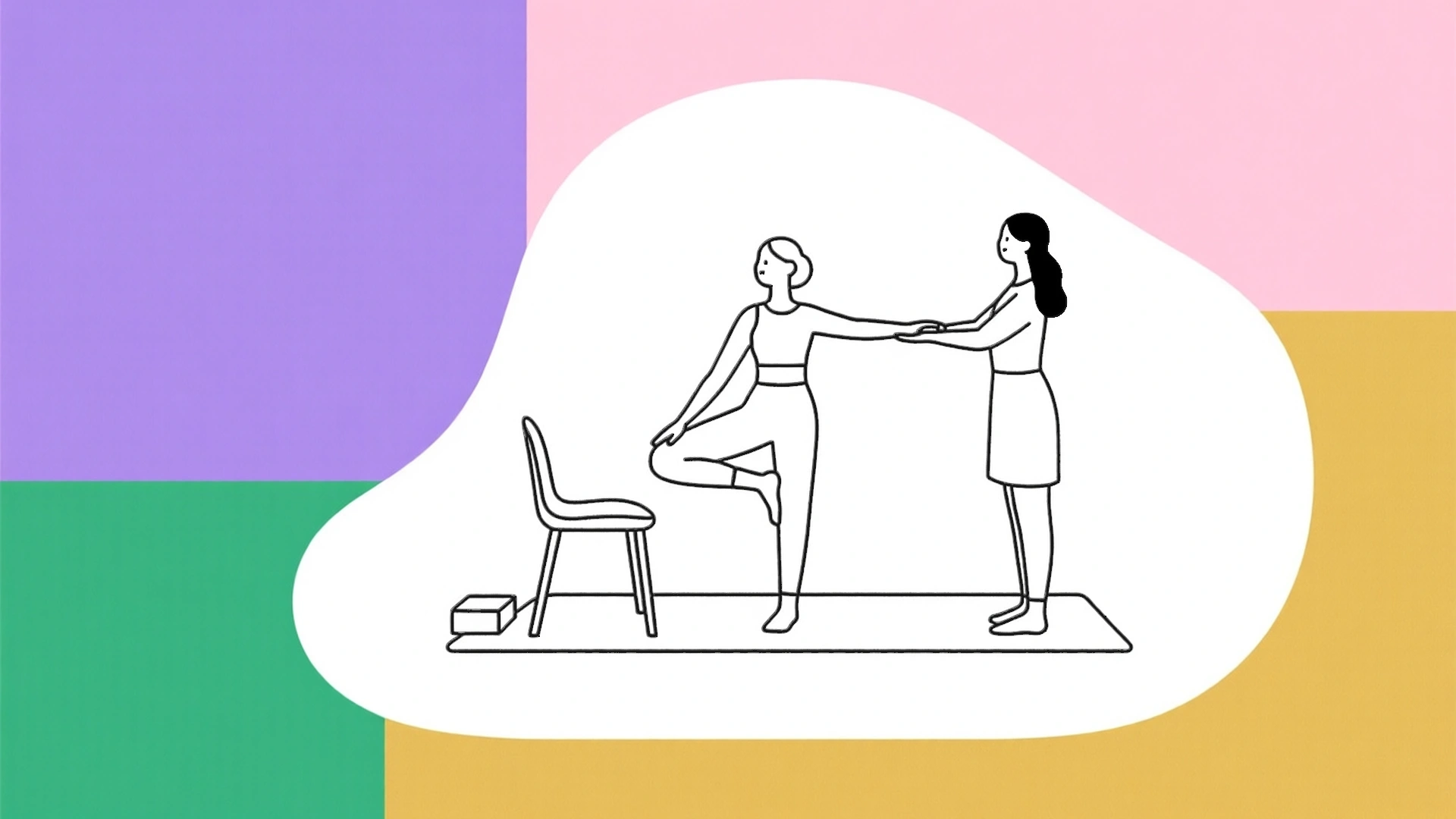
Begin with simple standing, seated or floor movements near stable support. Use blocks or a chair, keep breathing ordinary, and leave room at the end of each range. The goal is useful sensation and control - not matching the instructor’s body. Decide what success would look like in ordinary life, test the smallest viable version and notice both benefit and friction. Culture, cost, disability, caregiving and food or movement access are part of the intervention, not side notes.
Where the advice changes
Pregnancy, glaucoma, balance concerns, severe high blood pressure, joint injury and spinal conditions can require modifications. Beginners should avoid extreme inversions, forceful breathing and pain-based instruction. New, severe, rapidly worsening or function-limiting symptoms deserve assessment. Online education cannot examine, diagnose or monitor an individual, and it should not silently replace prescribed care.
What real life requires
A real class should make adaptation visible. When a teacher presents the chair-supported version as part of the practice rather than a lesser option, more bodies can participate with dignity and better information. Sustainable care often looks visually unimpressive: repeating an easier option, using an aid, resting before exhaustion, asking for clarification or returning after a disrupted week. That is not a lesser version of health; it is how evidence becomes usable.