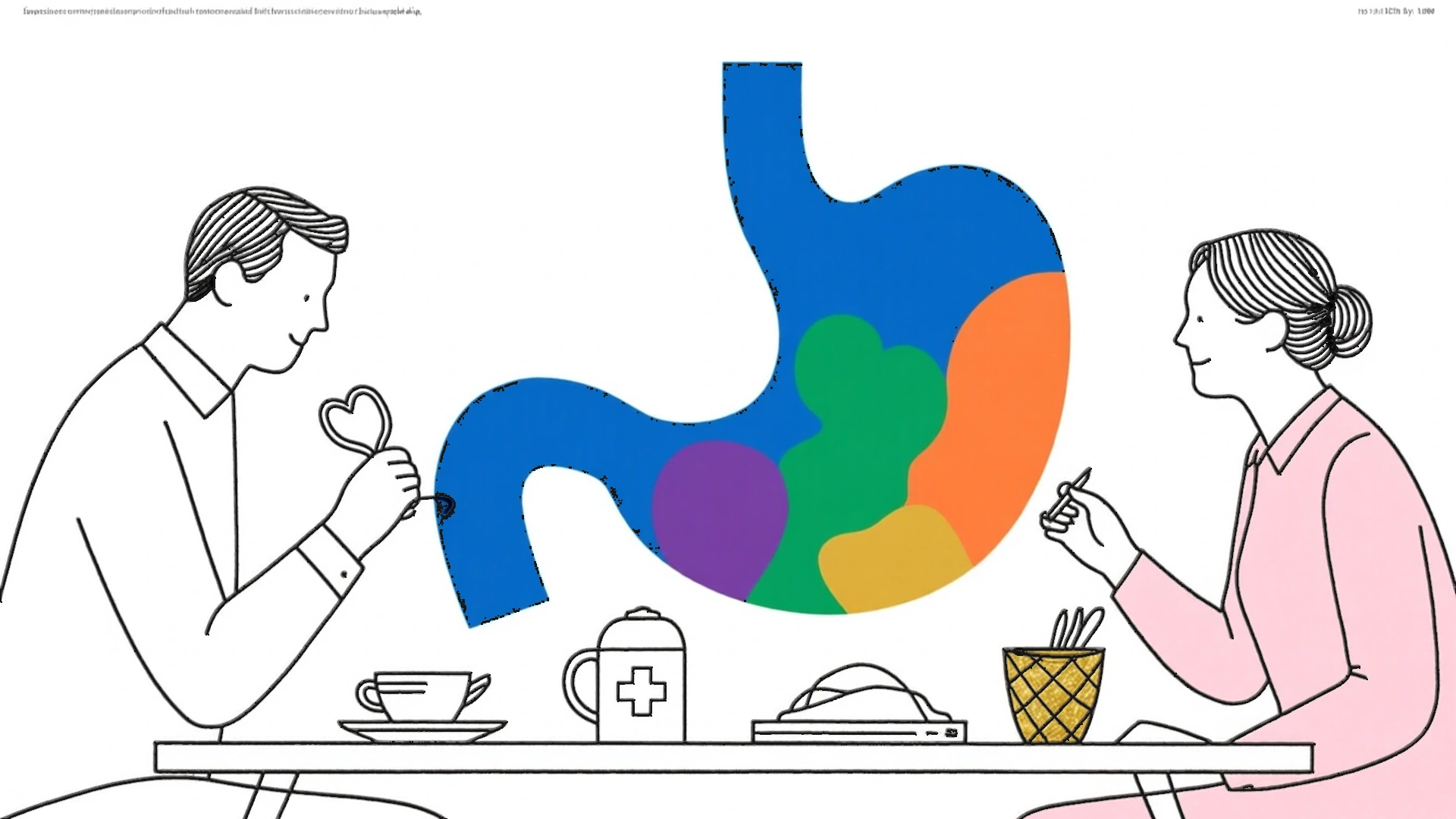
The human question
Start with the ordinary moment: Constipation involves frequency, stool form, straining and incomplete emptying. Fiber, fluids, activity and toileting conditions help differently across people. Livgently’s question is not how to optimize a body on paper, but how to make the evidence useful in an actual week - around culture, money, disability, caregiving, appetite and preference. Curiosity is useful here because the familiar rule is usually too blunt. Begin by separating the outcome people care about from the proxy that is easiest to measure. A score, target or streak may help observation, but it should not become a verdict on character or health.
What the evidence says
The research base includes controlled trials where possible, alongside cohort studies and systematic reviews. Study design matters: an association can identify a pattern without proving cause, a short trial may not predict long-term outcomes, and an average effect may not describe your response. The linked review lets you inspect the population, intervention and limitations rather than accepting a headline alone. We also look for consistency across methods rather than treating the newest paper as the final word. A systematic review can reveal the direction and uncertainty of a field, yet its conclusion is only as sound as the included studies. Absolute effects, harms, follow-up time and who was excluded matter alongside statistical significance.
A gentle experiment
A gentle experiment: Use a footstool if comfortable, allow unhurried time after a meal, and increase fiber gradually. Keep the change small enough to observe. Note what becomes easier, what becomes harder and whether the benefit survives a busy day. A useful habit should support life rather than demand that life reorganize around it. For gut health, context is part of the intervention: cost, schedule, pain, sensory needs, culture, safety and support can determine whether a theoretically effective step is usable. Decide in advance what success would look like in ordinary language, and give the experiment enough time to produce information without demanding permanence.
Where the advice changes
Where the advice changes: New constipation with bleeding, anemia, weight loss or severe pain requires evaluation. This article is general education, not a diagnosis. Symptoms, medicines, pregnancy, disability, eating-disorder history and chronic conditions can change both the goal and the safest route. Seek help sooner when symptoms are new, severe, rapidly worsening, disrupting daily function, or paired with red-flag signs described above. If a plan conflicts with prescribed treatment, discuss the conflict rather than silently replacing care. Online guidance cannot examine, diagnose or monitor an individual.
What real life requires
Real life is not a compliance test. If the research points toward a useful direction but the suggested action is inaccessible, the right response is adaptation - not shame. A clinician or qualified allied-health professional can help translate population evidence into an individual plan. This is why Livgently avoids transformation theatre. Sustainable care often looks visually unimpressive: repeating an easier option, using an aid, asking for clarification, resting before exhaustion, or returning after a disrupted week. Those choices are not loopholes. They are how evidence becomes lived practice.