The human question
Hydration advice is often compressed into a magic number. Real needs vary with body size, age, activity, climate, pregnancy, food, illness and medicines. Water regulates temperature, cushions joints and helps remove waste, but more is not endlessly better. A useful health story separates the outcome people care about from the proxy that is easiest to count. Rules and scores can support observation, but they should not become moral judgments.
What the evidence says
Fluid comes from drinks and food. Plain tea, coffee, sparkling water and unsweetened beverages can contribute; caffeine sensitivity varies. Population guidance is useful for orientation, while urine color, thirst, symptoms and a clinician’s advice may be more relevant for an individual. Studies of beverage patterns also cannot separate every behavior that travels with a preferred drink. We look for convergence across authoritative guidance, trials and systematic reviews rather than presenting one new paper as a final answer. Population, comparison group, duration, absolute effect and harms all shape what a finding can honestly mean.
A gentle experiment
Make water visible, drink with meals, and replace one sugary drink if that feels useful. During heat, exercise, fever, vomiting or diarrhea, needs can rise. The goal is steady access - not a competitive bottle challenge or anxiety over every ounce. Decide what success would look like in ordinary life, test the smallest viable version and notice both benefit and friction. Culture, cost, disability, caregiving and food or movement access are part of the intervention, not side notes.
Where the advice changes
Heart failure, kidney disease and some endocrine conditions may require fluid limits. Very excessive water intake can be dangerous. Persistent thirst, frequent urination, confusion, faintness or inability to keep fluids down deserves medical attention. New, severe, rapidly worsening or function-limiting symptoms deserve assessment. Online education cannot examine, diagnose or monitor an individual, and it should not silently replace prescribed care.
What real life requires
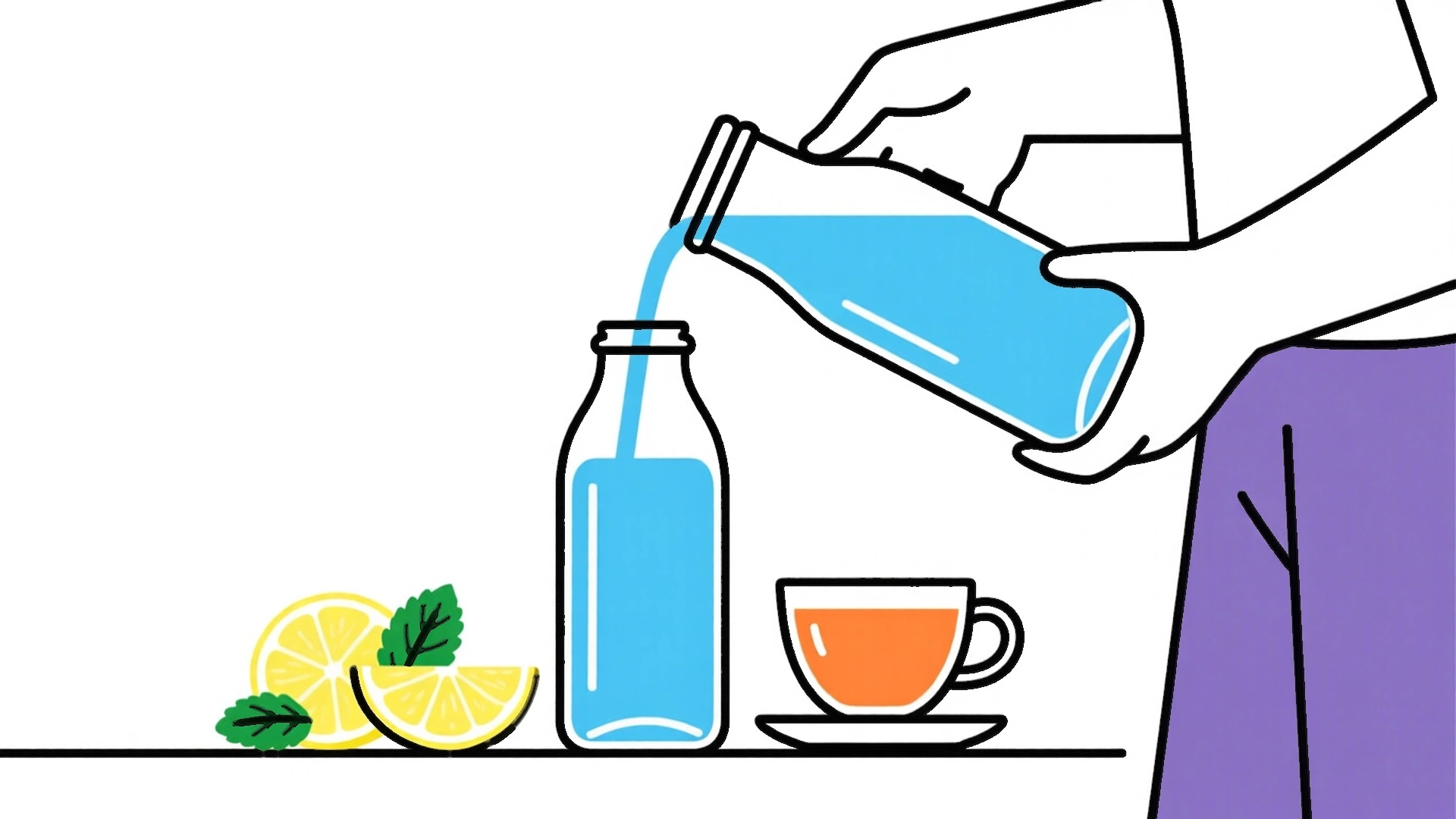
In real life, the best system may be environmental: a filled bottle beside a work station, a cup within reach for someone with limited mobility, or culturally familiar unsweetened drinks. The intervention is access and repetition, not virtue. Sustainable care often looks visually unimpressive: repeating an easier option, using an aid, resting before exhaustion, asking for clarification or returning after a disrupted week. That is not a lesser version of health; it is how evidence becomes usable.